
Behind the Craft: Meet the Artisans
Every piece of embellished Indian ethnic wear carries hours, sometimes weeks, of hand-worked detail behind it, the quiet, painstaking labor of Indian embroidery artisans whose skills have been passed down through generations of families and regional craft traditions. Before a single sequin or thread ever reaches a finished lehenga or saree, it passes through the hands of someone trained in a technique that may be centuries old. This piece is a look behind the craft itself — the techniques, the regional traditions, and the artisanship that make handmade Indian ethnic wear so distinct from anything mass-produced, and a chance to understand exactly what Indian embroidery artisans bring to every piece before it ever reaches a closet.
A Craft Rooted in Heritage
At Lashkaraa, our entire foundation is built on this idea of artisanal heritage. We set out to build a fashion house that gives women access to modern, high-quality designer fashion without the traditional luxury price tag, drawing directly on deep-rooted ethnic craft traditions — the sharara and the gharara, the salwar and the churidar, the kurta and the sherwani — and translating them into pieces that feel forward-thinking while staying rooted in tradition. That balance, between heritage and contemporary style, is really the whole idea behind everything we make, and it starts with the artisans and techniques behind the fabric itself.
Indian Embroidery Types Worth Knowing
Understanding the different Indian embroidery types used across ethnic wear is genuinely useful, since each technique has its own history, region of origin, and distinctive look.
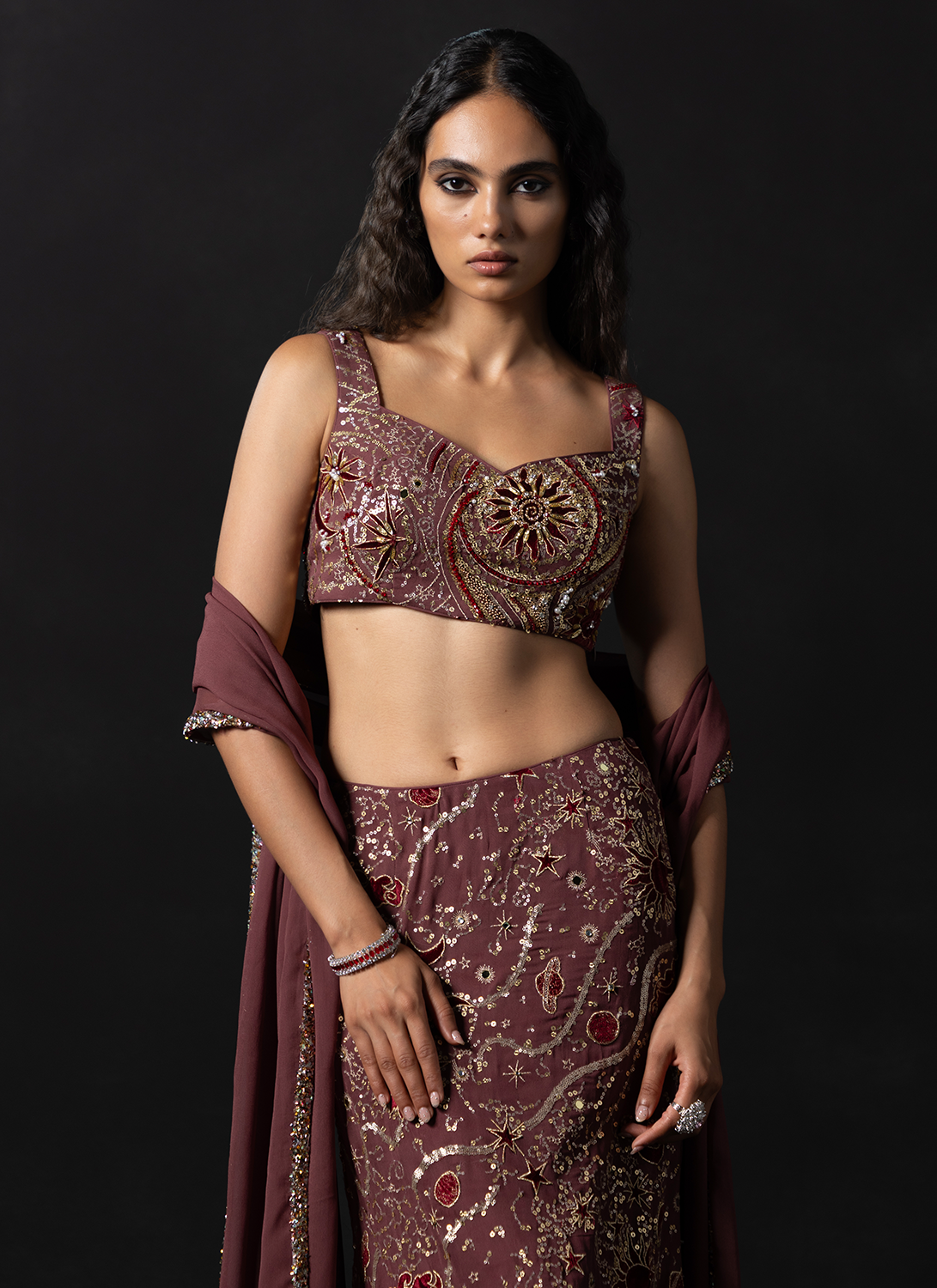
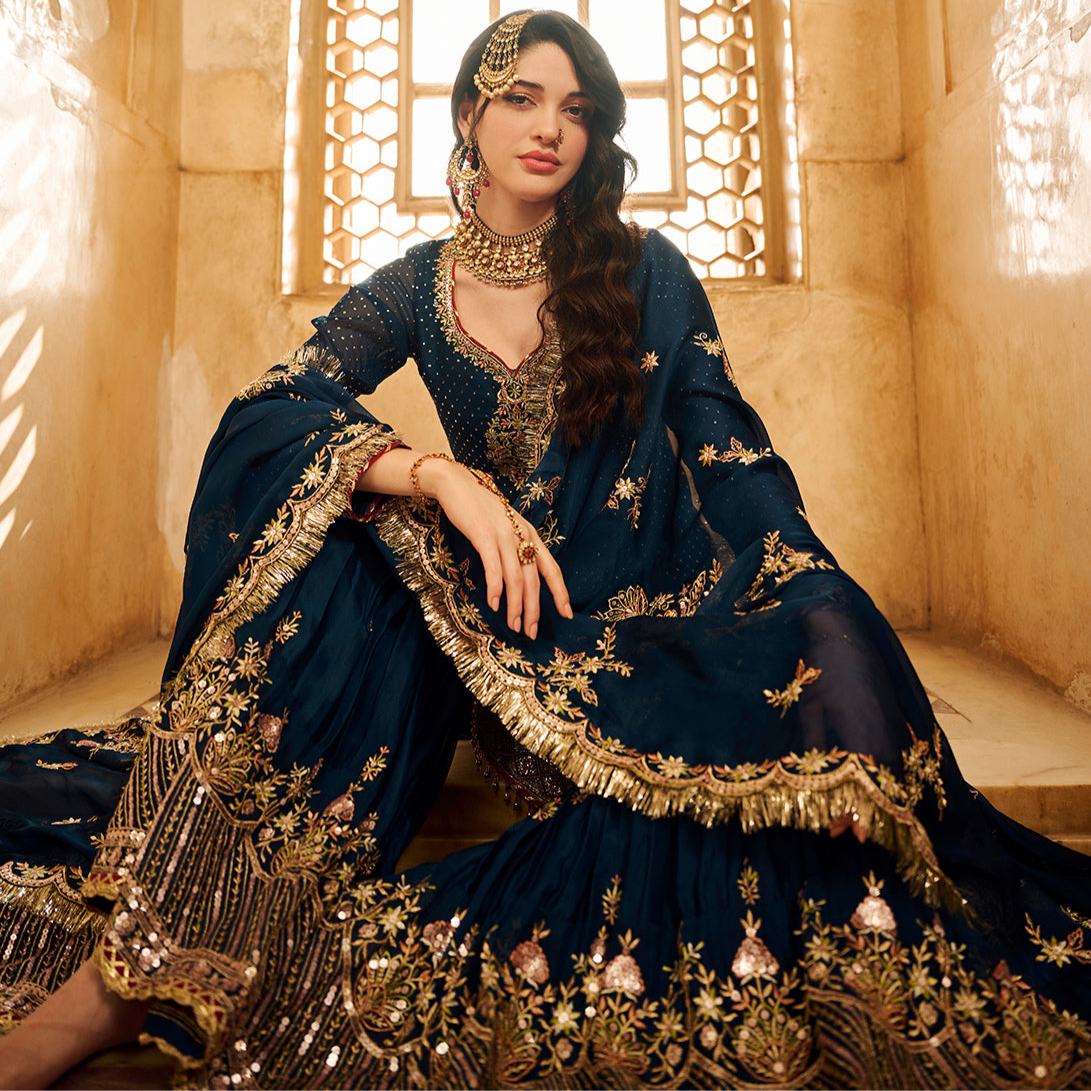
Zardozi is one of the most recognizable and labor-intensive forms of embellishment, involving metallic thread, sequins, beads, and sometimes semi-precious stones stitched onto fabric to create raised, dimensional designs. Historically associated with royal courts, zardozi remains a signature technique for bridal and formal wear today.
Zari work uses fine metallic thread, traditionally gold or silver, woven or embroidered into fabric to create shimmering patterns and borders. It's often used alongside other embroidery techniques rather than as a standalone style, adding a layer of shine and formality to a finished piece.
Aari embroidery, done with a hooked needle rather than a traditional needle, allows for fast, continuous chain-stitch work and is especially well suited to detailed floral and paisley motifs. It's a technique closely associated with Gujarat and parts of North India.
Chikankari, originating in Lucknow, is a delicate, white-on-white shadow embroidery technique traditionally done on fine cotton or muslin. Unlike heavier embellishment styles, chikankari is prized for its subtlety and the skill required to create such fine, even stitching by hand.
Phulkari, meaning "flower work," is a folk embroidery tradition from Punjab, characterized by bold geometric and floral patterns typically worked in vibrant thread on a solid-colored base fabric, often used for dupattas and shawls.
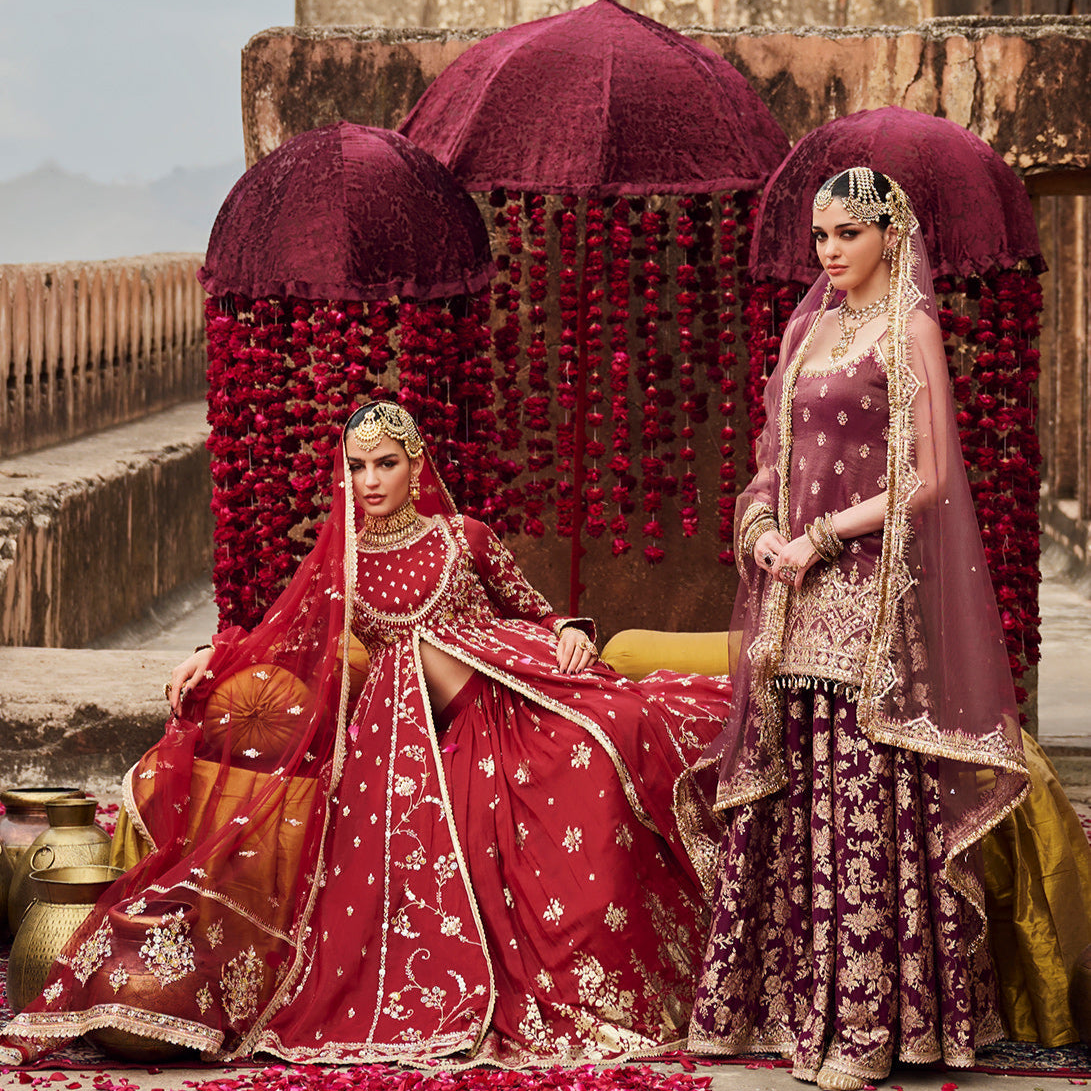
Gota Patti involves applying metallic ribbon or fabric appliqué to create raised, dimensional patterns, and is a technique closely associated with Rajasthan, frequently seen on festive and bridal pieces.
Mirror work, also known as shisha embroidery, involves stitching small, reflective mirror pieces into fabric using a decorative surrounding stitch, and is most closely associated with Gujarat and Rajasthan. It's a favorite for Navratri and folk-inspired festive wear, prized for the way it catches and scatters light with movement.
Together, these Indian embroidery types represent just a fraction of the country's regional embroidery traditions, each one tied to a specific place, history, and community of artisans who've kept the technique alive.
Zardozi Work: A Closer Look
Because it's one of the most labor-intensive and visually striking techniques in Indian embellishment, zardozi work deserves a deeper look on its own. The technique traces its roots back to royal ateliers, where artisans used real gold and silver thread to embellish garments for nobility. Today, zardozi work typically uses metallic thread alongside sequins, beads, and sometimes stones, hand-stitched onto a base fabric stretched tightly across a wooden frame to keep the work precise.
A single piece of zardozi work can take anywhere from several days to several weeks to complete, depending on the density and complexity of the design, which is part of why heavily embellished bridal pieces carry such a significant price difference from simpler, less embroidered styles. The skill involved is considerable: artisans train for years to master the tension, spacing, and technique required to create clean, durable embellishment that holds up to years of wear rather than fraying or loosening over time.
Artisan Craftsmanship in India: A Living Tradition
Artisan craftsmanship in India is known to span across an extraordinary range of regional specialties, each shaped by centuries of local material availability, trade history, and cultural tradition. Lucknow remains closely associated with chikankari, Gujarat with mirror work and aari embroidery, Rajasthan with gota patti and zardozi, and Punjab with phulkari — a geographic diversity that mirrors the broader diversity of Indian culture itself.
What ties all of these regional traditions of Indian artisanal craftsmanship together is the fact that they remain, overwhelmingly, hand-done skills passed from one generation to the next rather than techniques that have been fully mechanized. This is precisely why handmade pieces carry the value they do — not just the visual result, but the skill, time, and tradition embedded in every stitch and techniques like chikankari, zardozi and phulkari rightfully earned their GI tags.
Embroidery Techniques and What They Mean for Quality
Understanding basic embroidery techniques can genuinely help when shopping for ethnic wear, since the technique used affects both how a piece looks and how it holds up over time. Hand embroidery, regardless of specific technique, tends to have a slightly irregular, organic quality that distinguishes it from machine work, along with a depth and dimensionality that's difficult to replicate mechanically. Machine embroidery, while faster and more affordable, generally produces a flatter, more uniform result, which isn't necessarily worse, but is a genuinely different product with different value and durability characteristics.
When examining a piece, checking the back of the embroidery can tell you a lot: hand-stitched work typically shows slightly uneven thread tension and knotting on the reverse side, while machine work tends to look more uniform throughout. Neither is inherently right or wrong, but knowing the difference helps you understand exactly what you're paying for.
The Value of Handmade Ethnic Wear
There's a reason handmade ethnic wear commands both a premium price and a devoted following: it represents something genuinely difficult to replicate at scale. Each piece carries the slight, human variation that comes from being made by hand rather than machine, along with the accumulated skill of an artisan who has likely spent years, sometimes an entire career, perfecting a single technique.
Choosing handmade ethnic wear also means supporting the continuation of these regional craft traditions, many of which face real pressure from cheaper, mass-produced alternatives. Every handmade piece purchased is, in a small way, a vote for keeping these techniques alive for the next generation of artisans to learn and practice.
Supporting Craft Traditions
Behind every embellished lehenga, richly embroidered saree, or hand-worked kurta is a tradition of craftsmanship that stretches back generations. Techniques passed from artisan to artisan, region to region, refined over centuries into the intricate, beautiful work we see in finished pieces today. Understanding a bit about Indian embroidery artisans and the techniques they practice doesn't just make for a more informed purchase; it deepens appreciation for exactly what goes into every piece of ethnic wear worth celebrating. Read more about Lashkaraa’s legacy to understand the story behind our craft and vision.