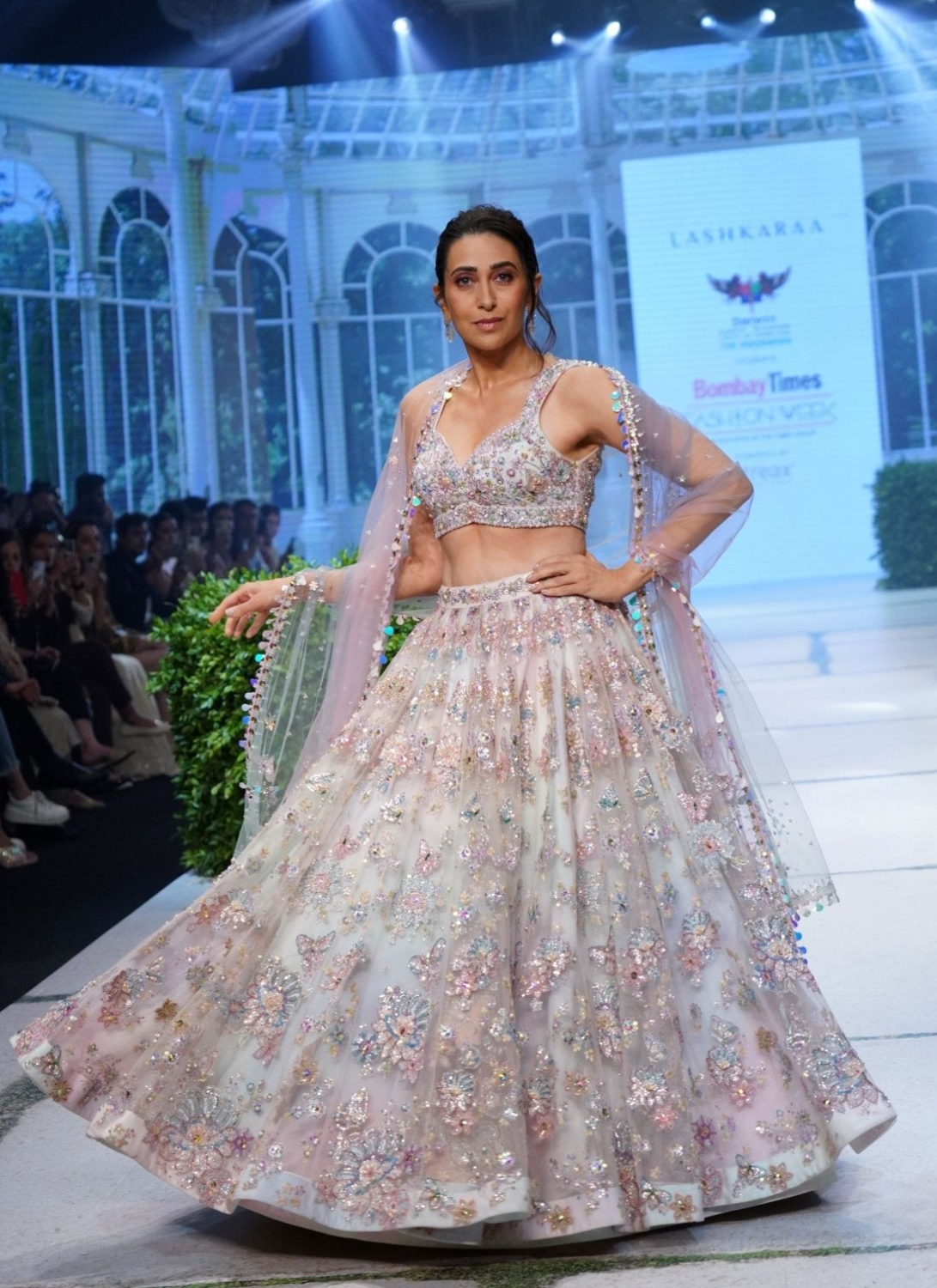
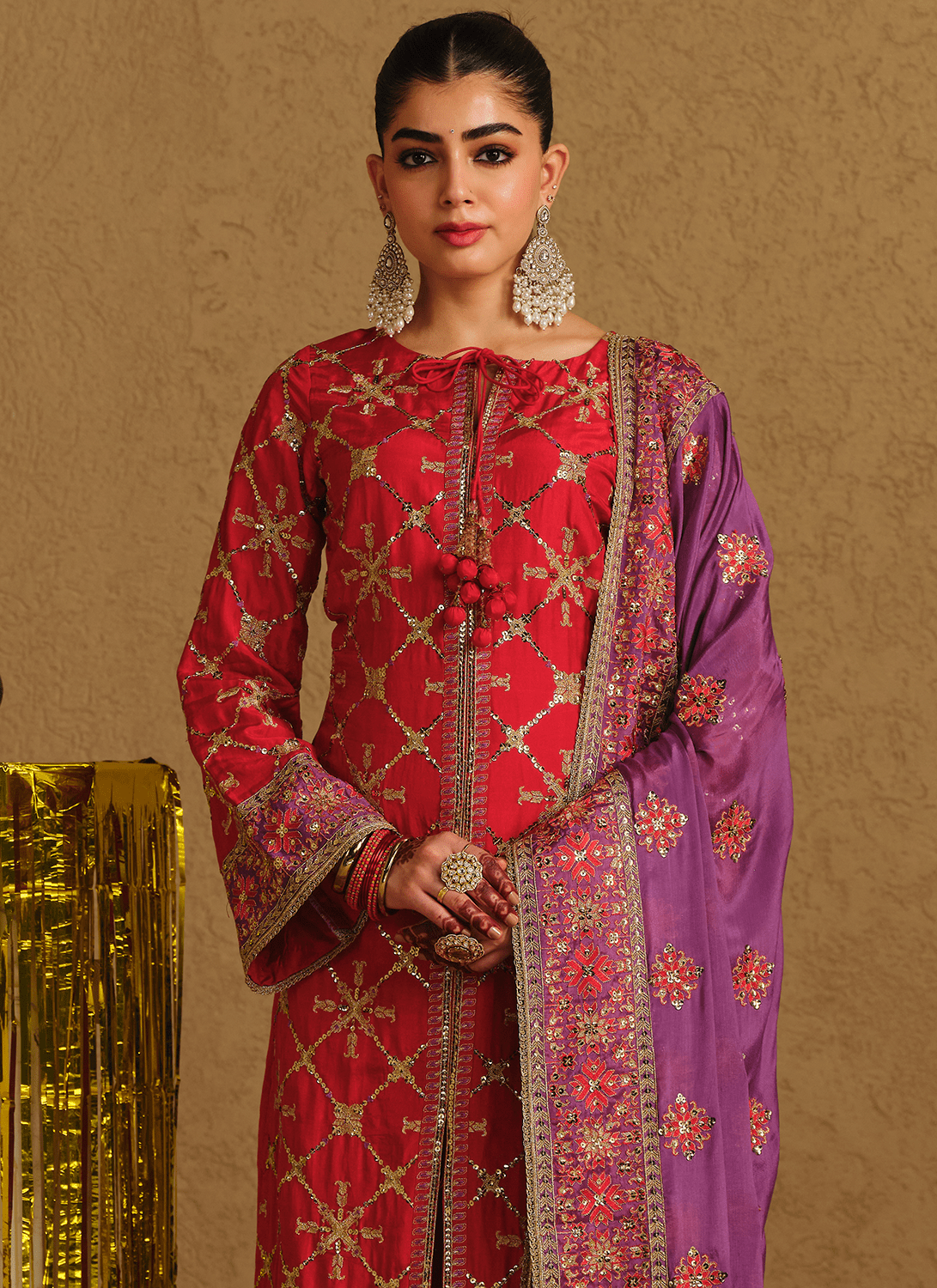
Fabric Guide: Silk vs. Georgette vs. Velvet vs. Crepe
Choosing the right outfit for a wedding, festival, or celebration isn't just about silhouette and color, fabric plays just as big a role in how a piece looks, feels, and holds up through a long event. This Indian dress fabric guide breaks down four of the most popular fabrics in ethnic wear — silk, georgette, velvet, and crepe — so you can shop with a clear sense of what each one actually offers, rather than guessing based on how a product photo looks.
Think of this as the Indian dress fabric guide you keep coming back to every time you shop, whether it's for a wedding, a festival, or a simple everyday piece.
Why Fabric Matters as Much as Design
It's easy to fall in love with an embroidery pattern or a color and forget to ask what the piece is actually made of, but fabric affects nearly everything about how an outfit performs in real life. It determines how the piece drapes, how heavy it feels after a few hours of wear, how well it photographs under different lighting, and even how appropriate it is for the season and climate of your event. A good Indian dress fabric guide should help you think through all of these factors before you commit to a purchase, not just after something arrives and doesn't feel quite right. That's exactly the gap a proper Indian dress fabric guide is meant to fill, turning fabric from an afterthought into one of your first shopping decisions.
Silk: The Classic Choice
Silk has been the foundation of Indian bridal and festive wear for centuries, and it remains one of the most requested fabrics for weddings, receptions, and formal celebrations. It has a natural sheen, holds embroidery and embellishment beautifully, and drapes with a structured elegance that's hard to replicate with synthetic alternatives. No Indian dress fabric guide would be complete without starting here, since silk sets the benchmark most other festive fabrics are compared against, and its many silk saree types are worth exploring on their own before moving to lighter alternatives.
Silk Saree Types Worth Knowing
Understanding silk saree types is especially useful, since "silk" covers a huge range of weaves and regional traditions, each with a distinct look and feel. Before diving into the specifics, it helps to know that silk saree types are usually distinguished by their region of origin, weaving technique, and finish, rather than being one single, uniform category of fabric.
- Banarasi silk is known for its rich gold and silver zari work, traditionally woven in Varanasi, and remains one of the most requested of all silk saree types for bridal wear.
- Kanjivaram silk, from Tamil Nadu, is prized for its heavier weight, vibrant color contrasts, and durability, often passed down as a family heirloom piece.
- Tussar silk offers a more textured, slightly matte finish, making it a popular choice for those who want the richness of silk without the high shine of a Banarasi.
- Chiffon and crepe silk blends offer a lighter alternative within the broader silk family, ideal for those who love the look of silk but want something easier to drape and move in.
Knowing these silk saree types before you shop means you can choose based on weight, shine, and regional tradition, rather than assuming all silk sarees behave the same way. Each of these silk saree types carries its own regional history too, so learning a bit about where a weave comes from can add real meaning to the piece you choose, beyond just how it looks.
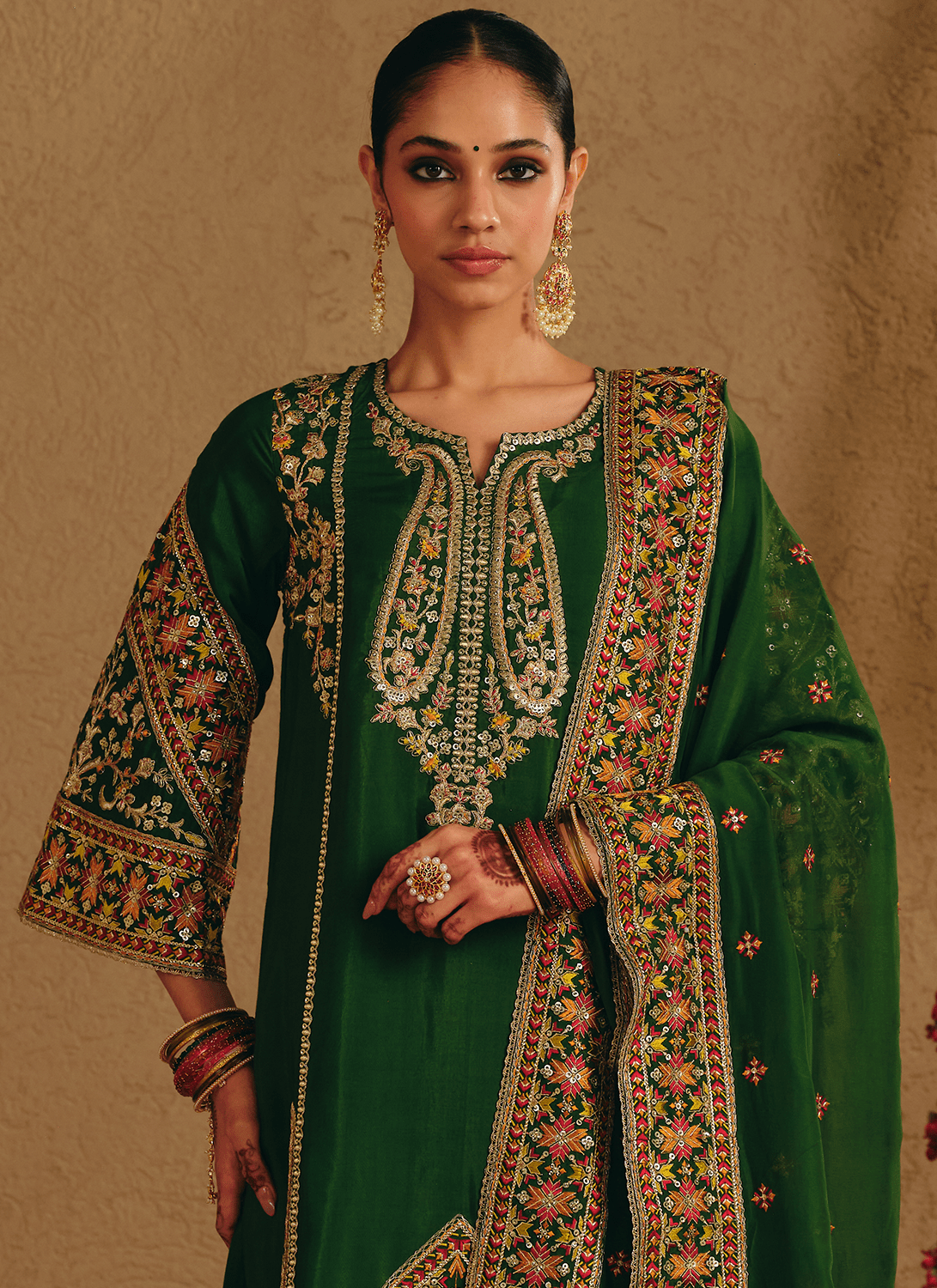
Our own silk silhouettes like the Moss Green Embroidered Silk Saree, Dusty Pink Embroidered Silk Lehenga, and Light Blue Embroidered Silk Anarkali are among popular pieces that blend silk with the best design and embroidery.

Georgette: Lightweight and Versatile
For shoppers weighing georgette vs chiffon before they've even opened a product page, it helps to know both fall under the same lightweight fabric umbrella but serve slightly different purposes.
Georgette has become one of the most popular fabrics in modern Indian ethnic wear, prized for its light weight, subtle texture, and beautiful flow. It works well for lehengas, sarees, and Anarkali suits alike, and its slightly crinkled texture gives it a distinctive look compared to smoother fabrics like silk or satin. If silk anchors one end of this Indian dress fabric guide, georgette sits comfortably at the more relaxed, everyday-festive end of the spectrum.
Georgette vs Chiffon: What's the Difference?
For anyone comparing georgette vs chiffon for the first time, it helps to remember that both come from the same lightweight fabric family but behave quite differently once made into a finished garment.
Georgette and chiffon are often confused, since both are lightweight, semi-sheer fabrics with beautiful drape — but the georgette vs chiffon comparison actually comes down to a few clear differences, and it's worth learning them once so you never have to second-guess a product listing again.
Georgette has a slightly grainy, textured surface due to its tightly twisted yarns, giving it a bit more body and structure than chiffon.
Chiffon, by contrast, is smoother and even more sheer, with a softer, more fluid drape that can feel almost weightless.
In terms of use, georgette tends to hold embroidery and embellishment a bit better than chiffon, since its texture gives stitching something to grip. Chiffon, meanwhile, is often favored for dupattas and overlays, where its extra sheerness and fluidity create a beautiful, floating effect. When deciding between the two, the georgette vs chiffon choice usually comes down to how much structure you want versus how ethereal and light you want the final drape to feel. If you're still torn on georgette vs chiffon after reading this, a simple test helps: hold a swatch of each up to the light — georgette will diffuse it slightly, while chiffon lets far more light straight through. Many of our own pieces actually blend the two, using georgette for the main garment and chiffon for the dupatta, so you get the benefits of both sides of the georgette vs chiffon comparison in a single outfit.
Look no further than our Ivory Embroidered Georgette Sharara, Off White Embroidered Georgette Lehenga and Mint Blue Embroidered Georgette Saree for silhouettes in georgette that the community is loving.
Velvet: Rich, Regal, and Seasonal
For anyone drawn to drama and depth, velvet lehenga fabric is often the first place people land, and for good reason.
Velvet lehenga fabric has surged in popularity over the past several years, particularly for winter weddings and evening receptions. Its dense, plush texture gives outfits an instantly luxurious, regal quality, and it photographs beautifully under warm, low lighting. Of the four fabrics in this guide, velvet lehenga fabric is easily the most season-dependent, which makes timing your purchase around the right event especially important.
Why Velvet Lehenga Fabric Stands Out
Velvet lehenga fabric absorbs and reflects light differently than lighter fabrics like georgette or chiffon, giving embellishment a deeper, more dramatic look. There’s a certain sheen to velvets that by nature of the fabric alone gives you a dressed up appeal of grandeur and is perfect as a partywear choice for celebrations like sangeet, receptions and evening events. It's particularly popular for bridal lehengas and winter receptions, where its weight and warmth actually work in your favor rather than against you, and it's frequently near the top of any list ranking the best fabric for lehenga shopping during cooler months specifically. That said, velvet lehenga fabric isn't the most practical choice for warm-weather or outdoor daytime events, since its density can feel heavy and warm in high temperatures. It's best reserved for cooler months, evening events, or air-conditioned indoor venues where its richness can really shine without becoming uncomfortable. If you're considering velvet lehenga fabric for a specific event, checking the venue's climate control and the time of year is just as important as picking the color.
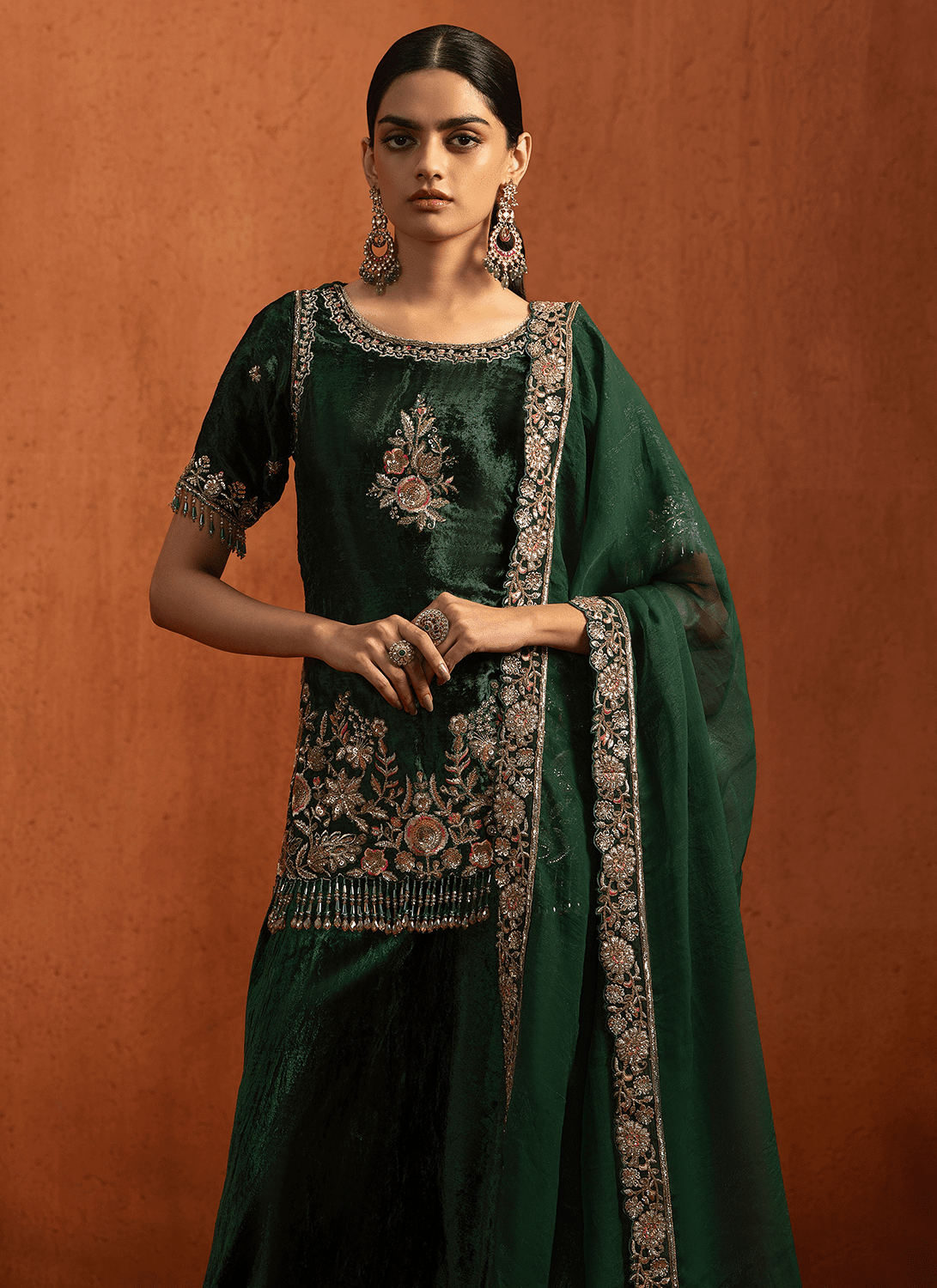
Pieces like our Blue Embroidered Velvet Lehenga, Purple Embroidered Velvet Sharara Suit, Dusty Pink Embroidered Velvet Anarkali are among the best selling styles in velvet that beautifully marry embroidery with the fabric.
Crepe: Understated Elegance
If the earlier fabrics in this guide lean toward richness and drama, crepe fabric is the quiet counterpoint — proof that elegance doesn't always need shine or heavy embellishment to make an impression.
Crepe fabric has quietly become a favorite for those who want elegance without excess weight or shine. It has a subtly textured, matte finish and a fluid drape that skims the body rather than clinging, making it a popular choice for both formal and semi-formal Indian ethnic wear, and it's consistently one of the more breathable ethnic fabrics on this list. Of the four fabrics in this guide, crepe fabric is probably the most underrated, since it rarely gets the same spotlight as silk or velvet despite offering genuine versatility.
Crepe fabric is especially well-suited to simpler, more tailored silhouettes like straight-cut suits, lehengas, or minimally embellished Anarkali suits — where the fabric's natural drape can take center stage instead of competing with heavy embroidery. It's also a practical choice for anyone who wants a slightly more modern, understated aesthetic compared to the high-shine finish of silk or the plush weight of velvet. Because crepe fabric holds its shape well without being stiff, it's a strong option for pieces that need to move comfortably through a long event, like a sangeet or reception, and it's increasingly showing up on lists of the best fabric for lehenga shopping for exactly that reason.
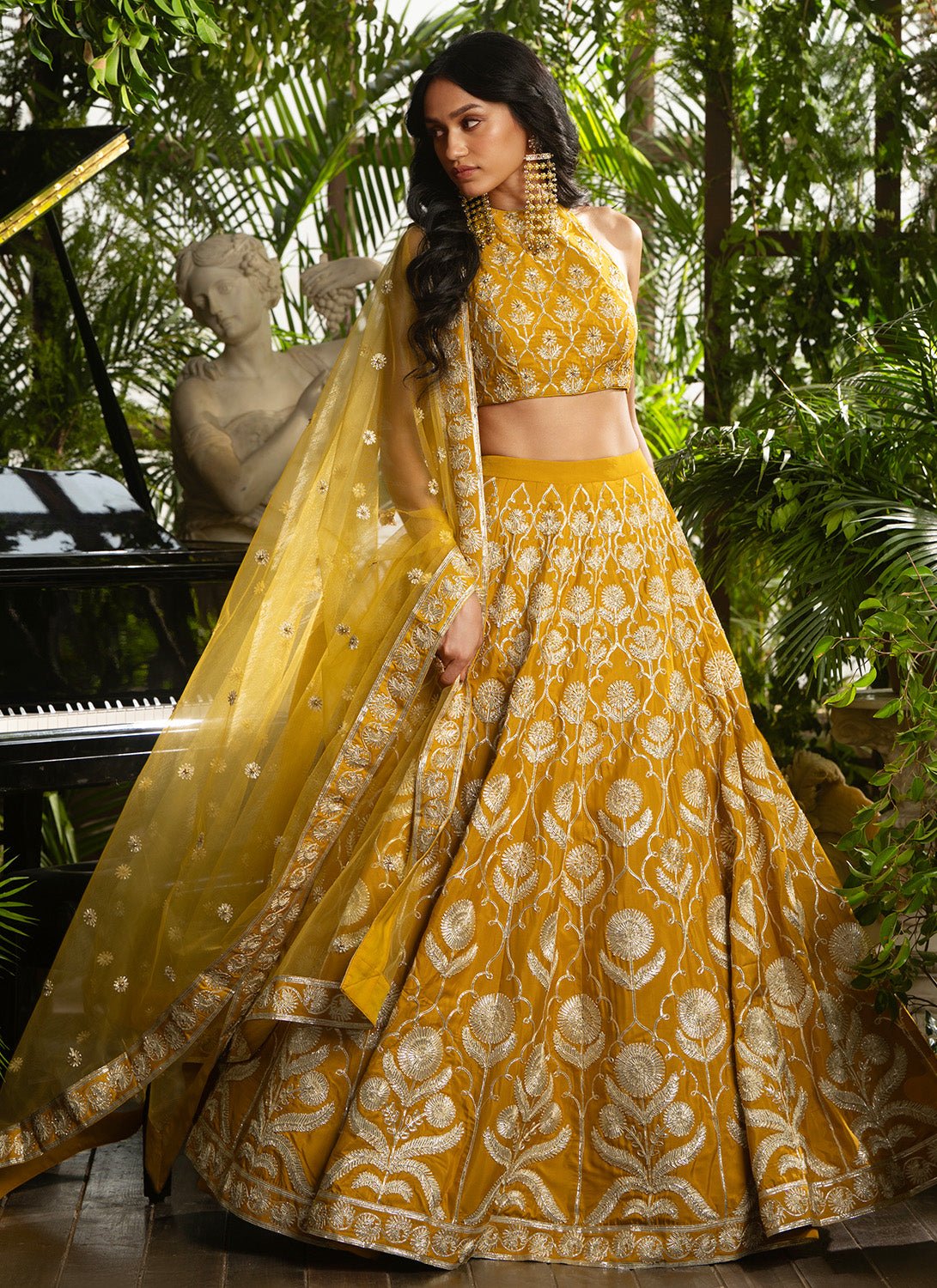
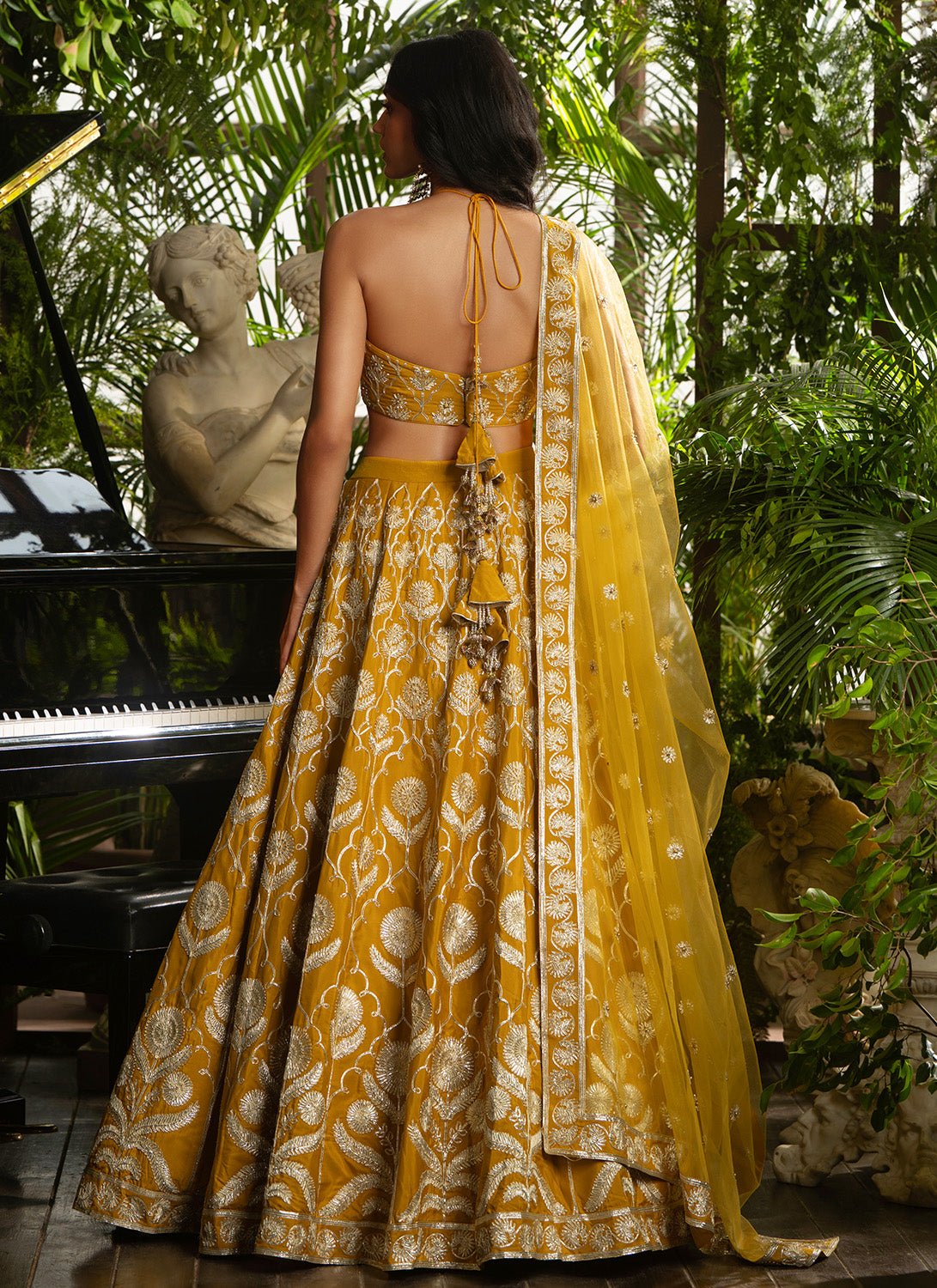
When it comes to crepe, silhouettes like our Light Green Embroidered Crepe Saree, Mustard Embroidered Crepe Lehenga and Maroon Embroidered Crepe Pant Suit are timeless options.

Best Fabric for Lehenga: A Quick Occasion Guide
Of all the questions we hear from shoppers, "what's the best fabric for lehenga shopping this season" comes up more than almost any other.
Choosing the best fabric for lehenga shopping really depends on the occasion, the season, and how much movement the event requires. For bridal wear and major ceremonies, silk and velvet remain the top choices, prized for their richness and how beautifully they hold heavy embellishment. For sangeets and dance-heavy events, georgette and crepe tend to be the smarter picks, since their lighter weight allows for much easier movement across a long night. For daytime or destination weddings, lighter silk blends or crepe again take the lead, offering elegance without the heat retention of velvet or heavier silk weaves. There's rarely a single best fabric for a lehenga that works for every event. It's really a question of matching fabric to the specific occasion in front of you.
If you're unsure which is the best fabric for a lehenga for your specific event, a good rule of thumb is to think about how long you'll be wearing it and how much you'll be moving; the more active the event, the lighter the fabric should be. And if you're shopping for more than one event this season, it's worth choosing a different fabric for each occasion rather than trying to find one piece that does everything.
Breathable Ethnic Fabrics for Comfort
Comfort deserves its own section in any serious Indian dress fabric guide, and this is where breathable ethnic fabrics come into the conversation directly.
If comfort is a top priority, especially for long events or warmer climates, it's worth knowing which options count as genuinely breathable. Cotton remains the gold standard for breathability, though it's less common in heavily embellished festive pieces. Among the four fabrics covered in this guide, georgette and crepe are the most breathable, thanks to their lighter weight and looser weave structure compared to silk or velvet. Chiffon also breathes reasonably well, though its sheerness sometimes requires an underlining layer that can reduce some of that natural airflow. When customers ask us about breathable ethnic fabrics, georgette and crepe are almost always our first recommendation for exactly this reason.
Choosing breathable ethnic fabrics matters most for daytime events, outdoor ceremonies, or destination weddings in warmer climates, where a heavier fabric can genuinely affect your comfort throughout a long day of celebrations. It's a small consideration that makes a real difference by the third or fourth hour of any event, and it's really the same underlying logic that drives most fabric for summer Indian wear recommendations. Building your festive wardrobe around a mix of rich, structured pieces and genuinely breathable ethnic fabrics gives you options no matter what the venue or season throws at you — and a solid fabric for summer Indian wear shortlist is simply the warm-weather half of that equation.
Fabric for Summer Indian Wear
Summer shopping calls for a slightly different mindset, and it overlaps heavily with the same breathable ethnic fabrics discussed above.
If you're shopping specifically for warm-weather events, finding the right fabric for summer Indian wear can make a real difference in how comfortable you feel throughout the day. Georgette and crepe fabric are both excellent choices, offering enough structure to hold embellishment without trapping heat the way silk or velvet can. Cotton-silk blends are another strong option, combining some of silk's natural sheen with cotton's breathability.
Pure silk and velvet, while beautiful, are generally better saved for cooler months or evening events, since both tend to feel considerably warmer against the skin during extended wear in high temperatures. If you're building out a summer wardrobe, prioritizing fabric for summer Indian wear over embellishment level will do far more for your comfort on the actual day.
When shopping for fabric for summer Indian wear, it also helps to consider the weave itself, not just the fiber, a loosely woven georgette will breathe better than a densely embellished, heavily lined version of the same fabric or a viscose chinon drape can give you the breathability and desired style to any silhouette. A quick check of the lining material, if the listing mentions one, can also tell you a lot about how the finished piece will actually feel to wear. Keep a short mental checklist of fabric for summer Indian wear essentials — georgette, crepe, cotton-silk blends — and you'll rarely go wrong shopping for a warm-weather event. From our latest collections, check out Gulposh for its most diverse range of summer friendly silhouettes in breathable fabrics.
Material Matters
This Indian dress fabric guide comes down to matching fabric to occasion just as much as matching color or silhouette. Silk brings timeless richness and a wide range of regional silk saree types, georgette and chiffon offer lightweight versatility with subtly different textures and count among the most breathable ethnic fabrics available, velvet lehenga fabric delivers seasonal drama and warmth, and crepe fabric rounds things out with understated, comfortable elegance. Whichever you choose, understanding what you're actually buying — not just how it looks in a photo — makes for a far better shopping experience and a piece you'll genuinely enjoy wearing. Bookmark this Indian dress fabric guide for your next few purchases, since fabric knowledge tends to pay off again and again once you actually have it.
At Lashkaraa, we stay up to date with ensembles in fabrics all meant to make you look your best while feeling your best too! Explore our collection of silk, crepe, georgette and velvet pieces suited to your next occasion, including plenty of options if you're specifically searching for fabrics suited for Indianwear.