Shisha Embroidery: India’s Ancient Craft of Mirror Work
If you’ve caught a glimmering detail in Indian ethnic wear—small sparkles of light that reflect from the twirls of skirts and swings of dupattas—that’s most likely the work of shisha embroidery, more commonly known as mirror work. There is something almost magical about a piece of fabric that catches the light and throws it back at you in a hundred tiny, dazzling fragments. Walk through any craft bazaar in Rajasthan or Gujarat, and you will encounter it everywhere, on quilts hanging from market stalls, on the borders of a bride's dupatta, on the cushion covers and wall hangings that generations of artisans have passed down like heirlooms.
Shisha embroidery is one of India's most beloved and enduring needlework traditions. It involves stitching small pieces of reflective glass or mirror onto fabric with a thread framework, creating textiles that shimmer and catch the eye in ways no dye or print ever could. The technique looks deceptively simple from a distance, but up close it reveals an intricate web of stitches, patterns, and regional signatures that speak to centuries of craftsmanship.
What Is Shisha Embroidery or Mirror Work?

The word shisha (also spelled sheesha or shisha) simply means "glass" in several South Asian languages and is derived from the Persian shīsha. In the context of embroidery, it refers to the practice of attaching small, circular or irregularly shaped pieces of reflective material, historically mica, beetle wings, or hammered silver, and later thin mirror glass, onto cloth using a combination of foundational stitches and decorative border stitches.
The mirror itself is not sewn directly through the fabric; glass cannot be pierced with a needle. Instead, the artisan first creates a "cage" of thread over the mirror, anchoring it in place with a criss-cross lattice of holding stitches. Once the mirror is secured, a second round of stitching, typically a blanket stitch, buttonhole stitch, or a more elaborate chain-stitch border, frames the mirror and integrates it into the surrounding embroidery motifs. The result is a mirror that appears set like a jewel, surrounded by a neat ring of thread that holds it firmly and ornamentally at the same time.
The surrounding embroidery is equally important to the overall aesthetic. Mirrors are rarely placed in isolation. They are embedded within broader designs, geometric patterns, floral motifs, peacocks, elephants, human figures, and paisley forms, all stitched in colourful thread, often silk or cotton floss, on vibrant base fabrics like silk, cotton, or wool. The interplay between the matte embroidery and the reflective mirror creates a visual rhythm that is both lively and deeply satisfying to the eye.
The History and Origins of Shisha Work
Shisha, with its roots in Persia, made its way to India during the Mughal Era and found its home in the dry deserts of Gujarat and Rajasthan. Across the vast sun-drenched plains of the region, shisha work was a way of adding some colour and light to their lives. Their reflections were considered to ward off evil spirits and protect the wearer. Over time, this form of embroidery became central to their social and ceremonial life, as the folk traditions of these regions are ancient and revered. Brides embroidered their own trousseau. Community women gathered to stitch together. Wedding garments, temple offerings, household textiles, and cattle decoration all became canvases for mirror work. Over time, mirror embroidery became so deeply woven into the identities of specific communities such as the Rabari pastoralists, the Banjara nomads, and the Sindhi settlers that it served almost as a form of visual language, communicating caste, community, marital status, and regional belonging.
How Shisha Embroidery Is Made
The process begins with the base fabric stretched on a frame, and thread and mirrors selected according to the design. To attach each mirror, the artisan holds it in place and lays two horizontal stitches and then two vertical stitches across it, forming a loose grid — the foundational cage. A circular stitch around the perimeter tightens the hold.
A decorative border stitch (blanket or chain) is then worked around the mirror's edge, transforming the functional cage into an ornamental "setting." The artisan fills the surrounding area with embroidered motifs using chain stitch, satin stitch, herringbone, cross stitch, and running stitch, balancing mirror placement with threadwork so the piece catches light without becoming overwhelming. A substantial piece can take weeks or months; contemporary production often divides the labour, speeding up the process at some cost to individual expression.
Regional Styles Across India

One of the most fascinating aspects of shisha embroidery is that it does not exist as a single uniform tradition. Instead, it has evolved differently across the various communities and regions that practice it, each developing its own characteristic stitch vocabulary, color palette, motif repertoire, and use context.
Gujarat is the most celebrated center of the craft. The Rabari community of Kutch produces bold, dense work with small mirrors set in geometric patterns on deep red or black cloth. The Ahir community favours larger mirrors and bright floral designs, while Saurashtra tends toward more restrained, delicate arrangements.
Rajasthan blends courtly and folk influences. Mirror work often accompanies zardozi or gota patti embellishments in formal wear, while communities like the Meghwal and Banjara produce vigorous folk-style pieces.
Sindh (historically connected to western India) developed its own richly embroidered shisha tradition; after Partition, Sindhi artisans resettled across India, and their vocabulary mingled with local styles.
Haryana and Punjab have their own mirror-work traditions, often associated with phulkari (literally "flower work") embroidery, where mirrors are sometimes incorporated into the dense silk-thread patterns characteristic of this style.
In Andhra Pradesh and Telangana, a tradition of mirror work exists in the form of kashida embroidery, which tends toward larger mirror placements and bold geometric arrangements. The Lambani communities of Karnataka, mentioned above in the Banjara context, produce work that is particularly striking in its use of patchwork combined with mirror embroidery and appliqué, creating textiles that are almost sculptural in their layered texture.
Shisha in Modern Fashion

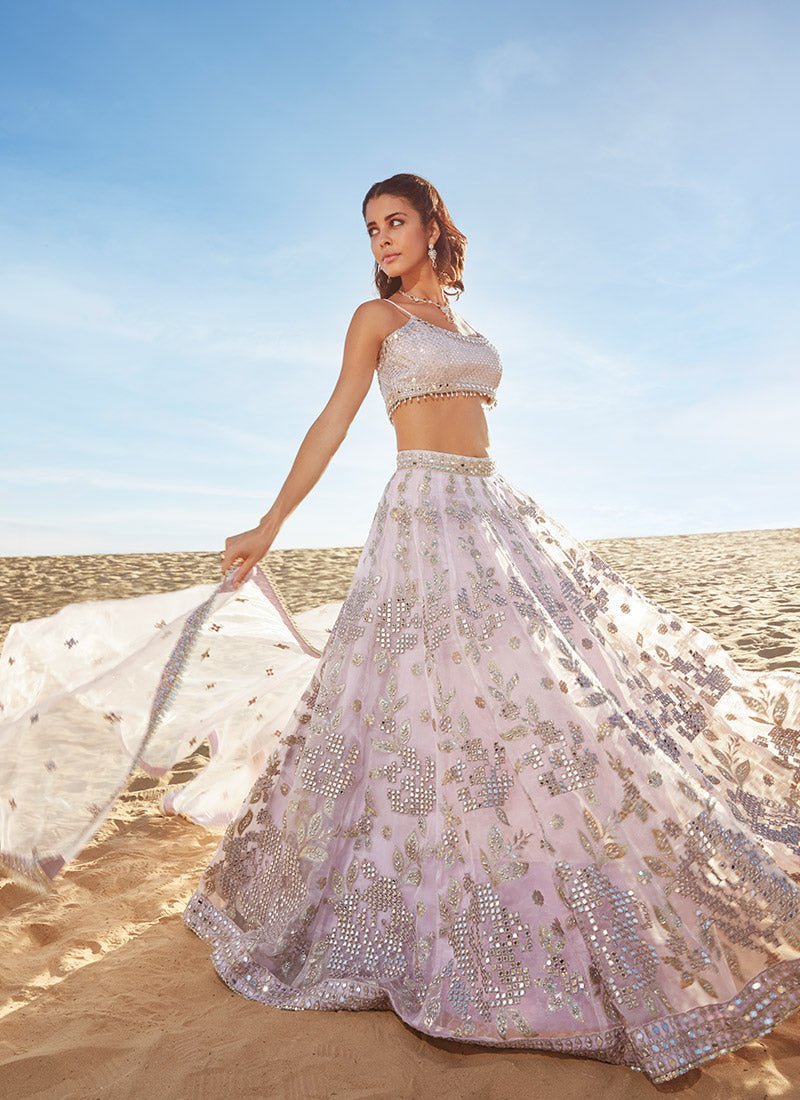
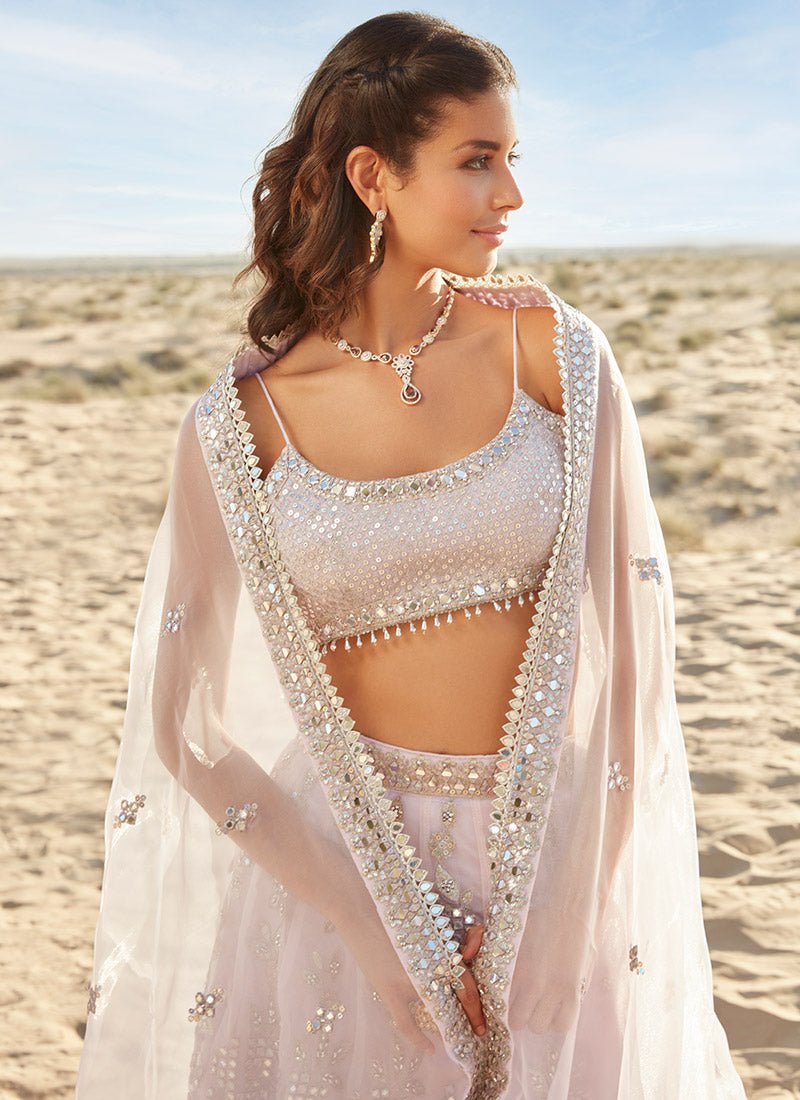
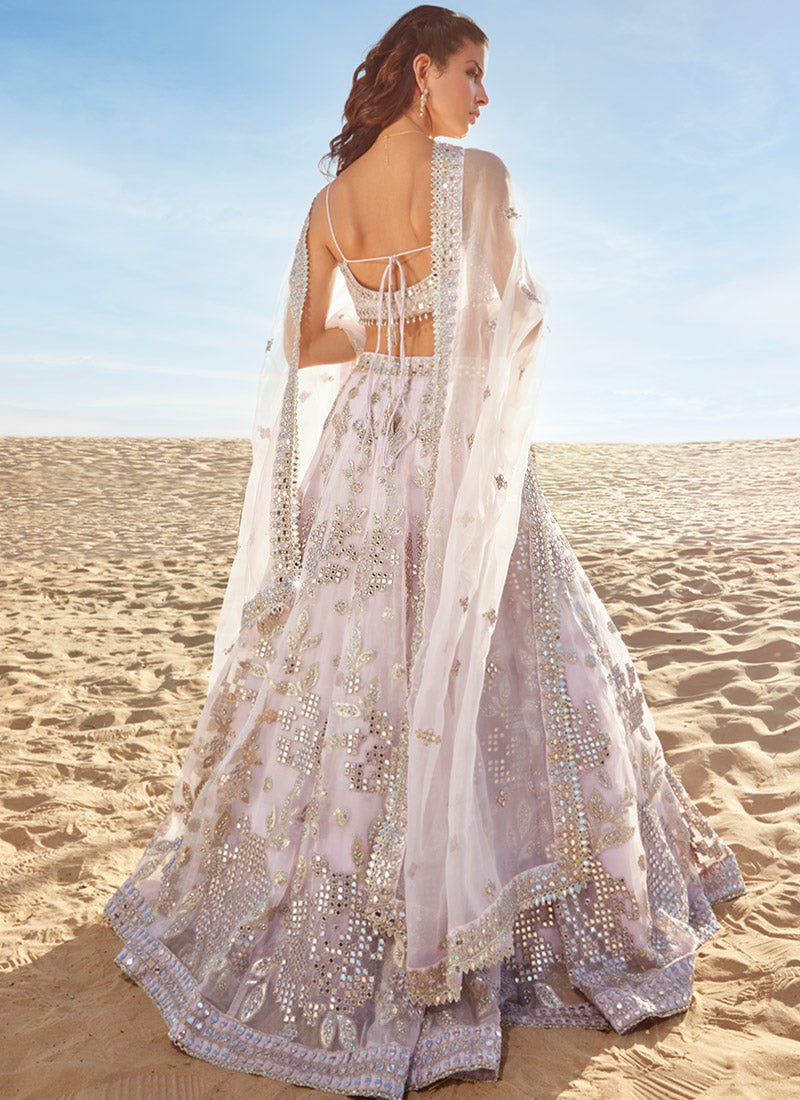
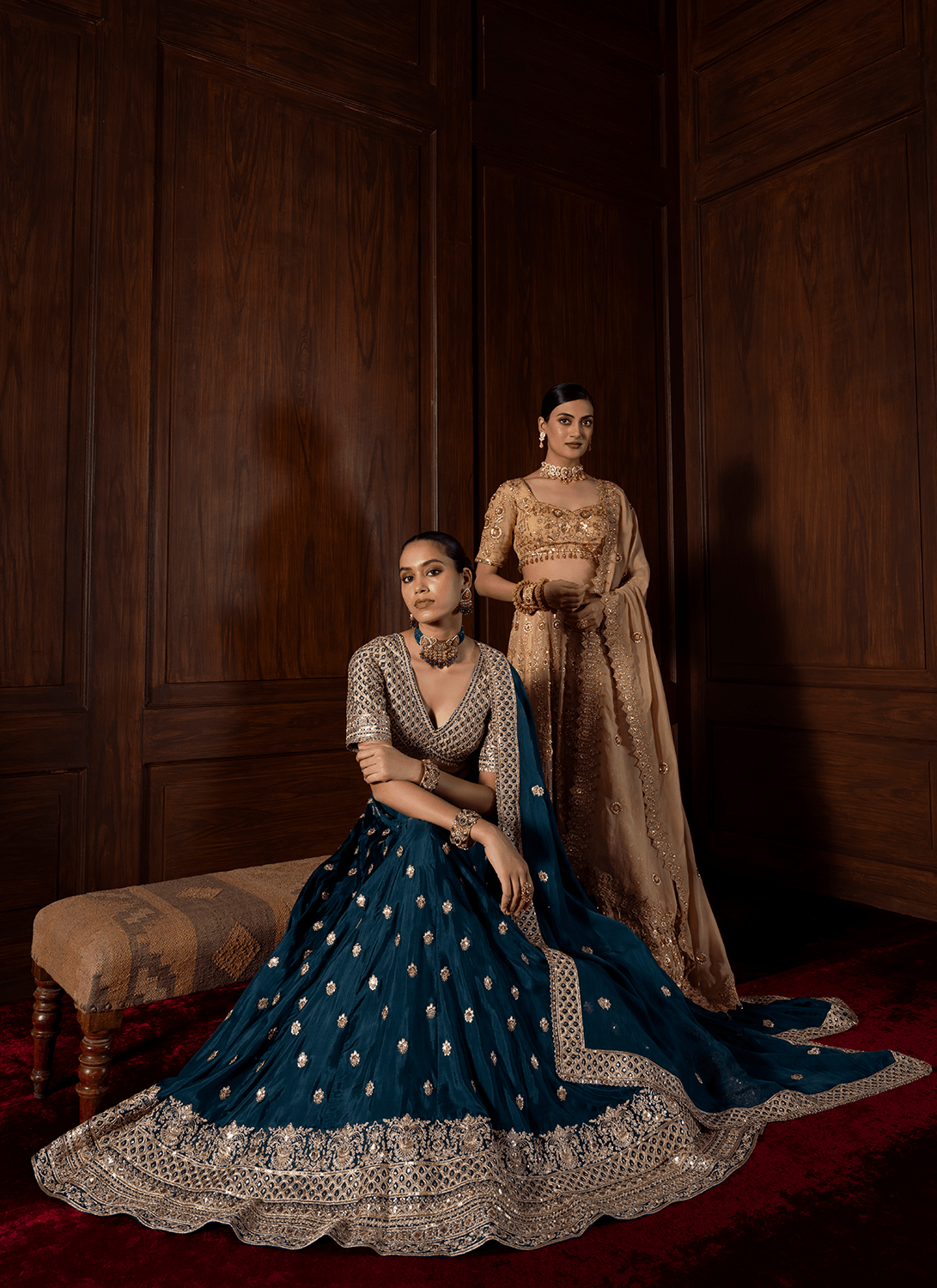
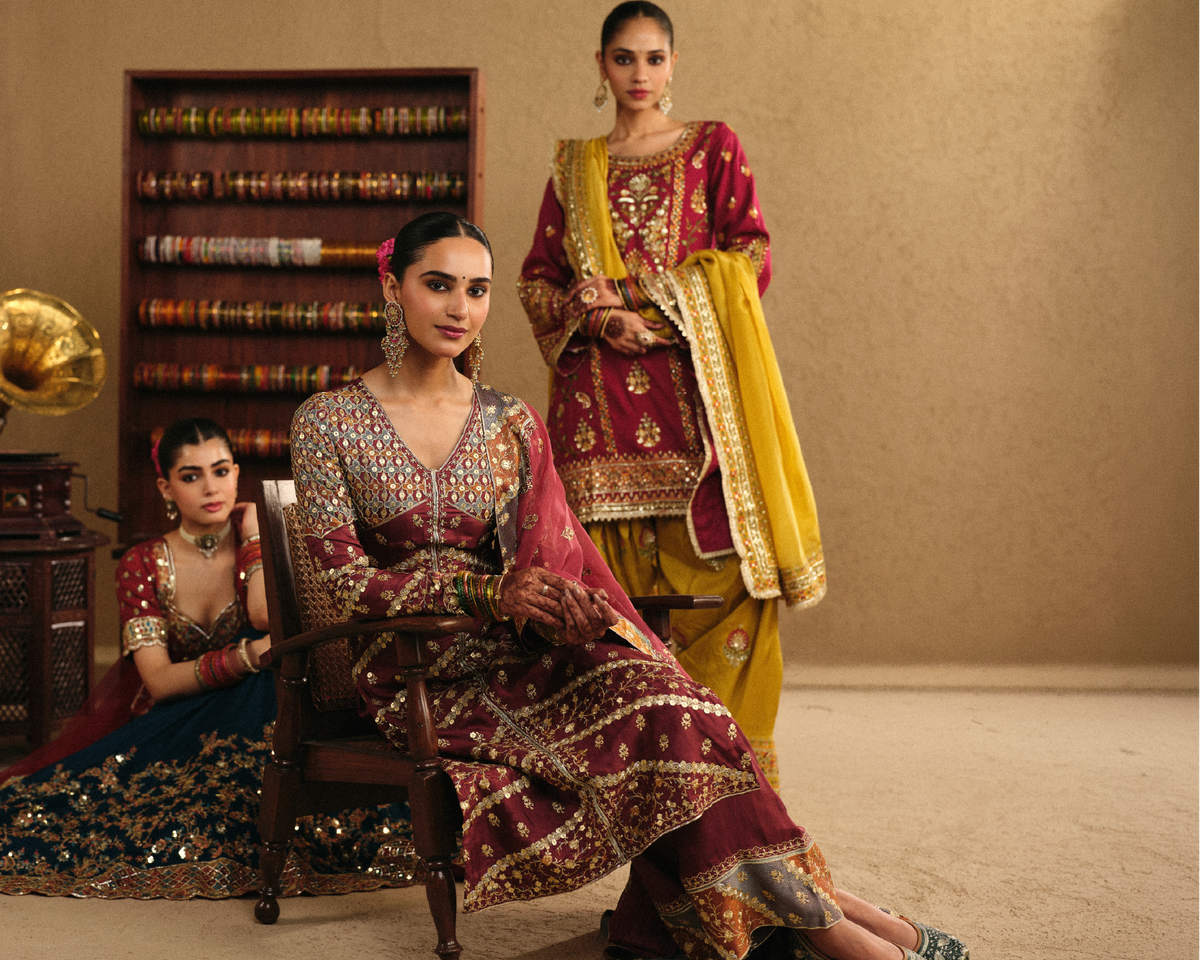
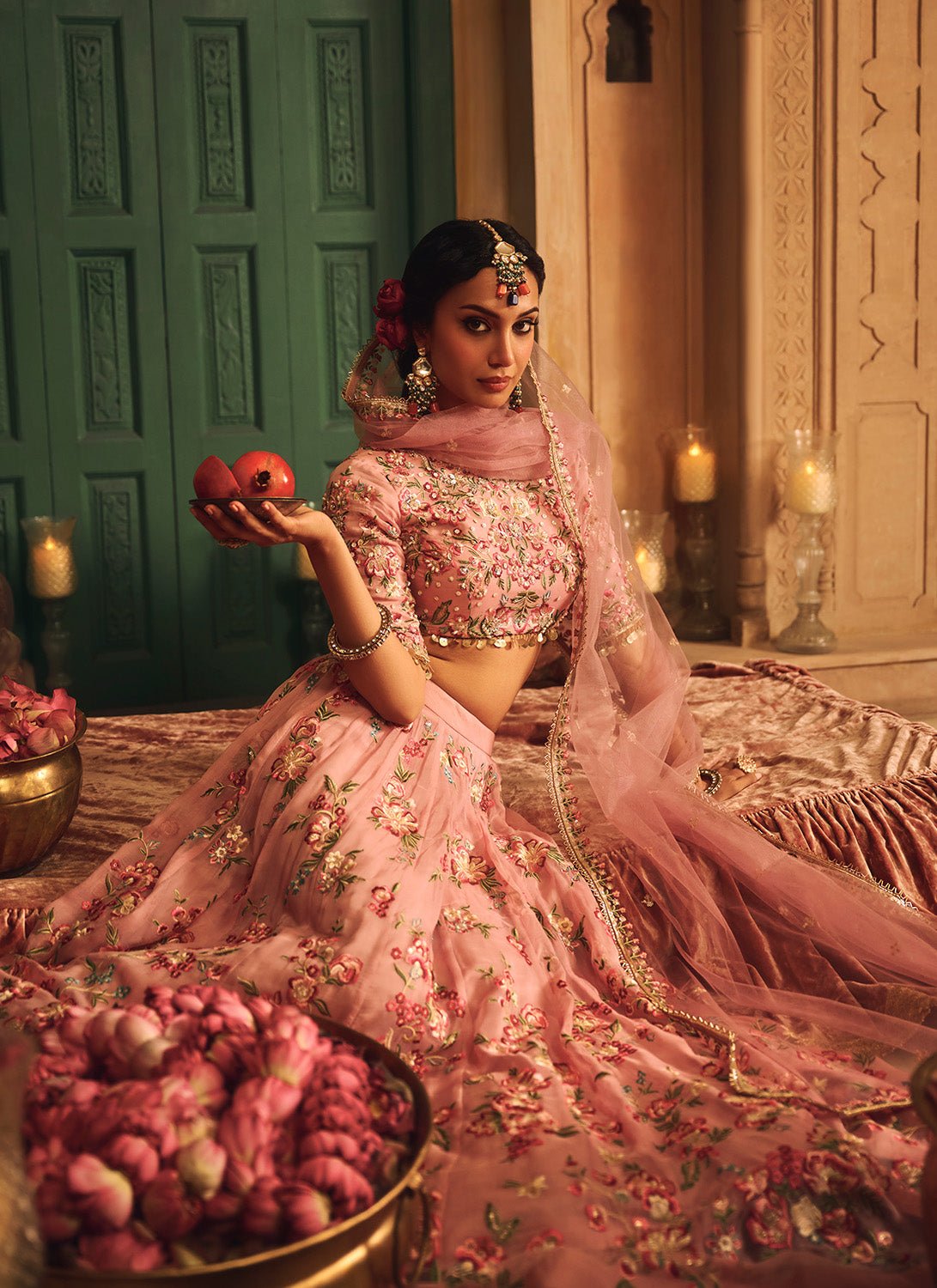
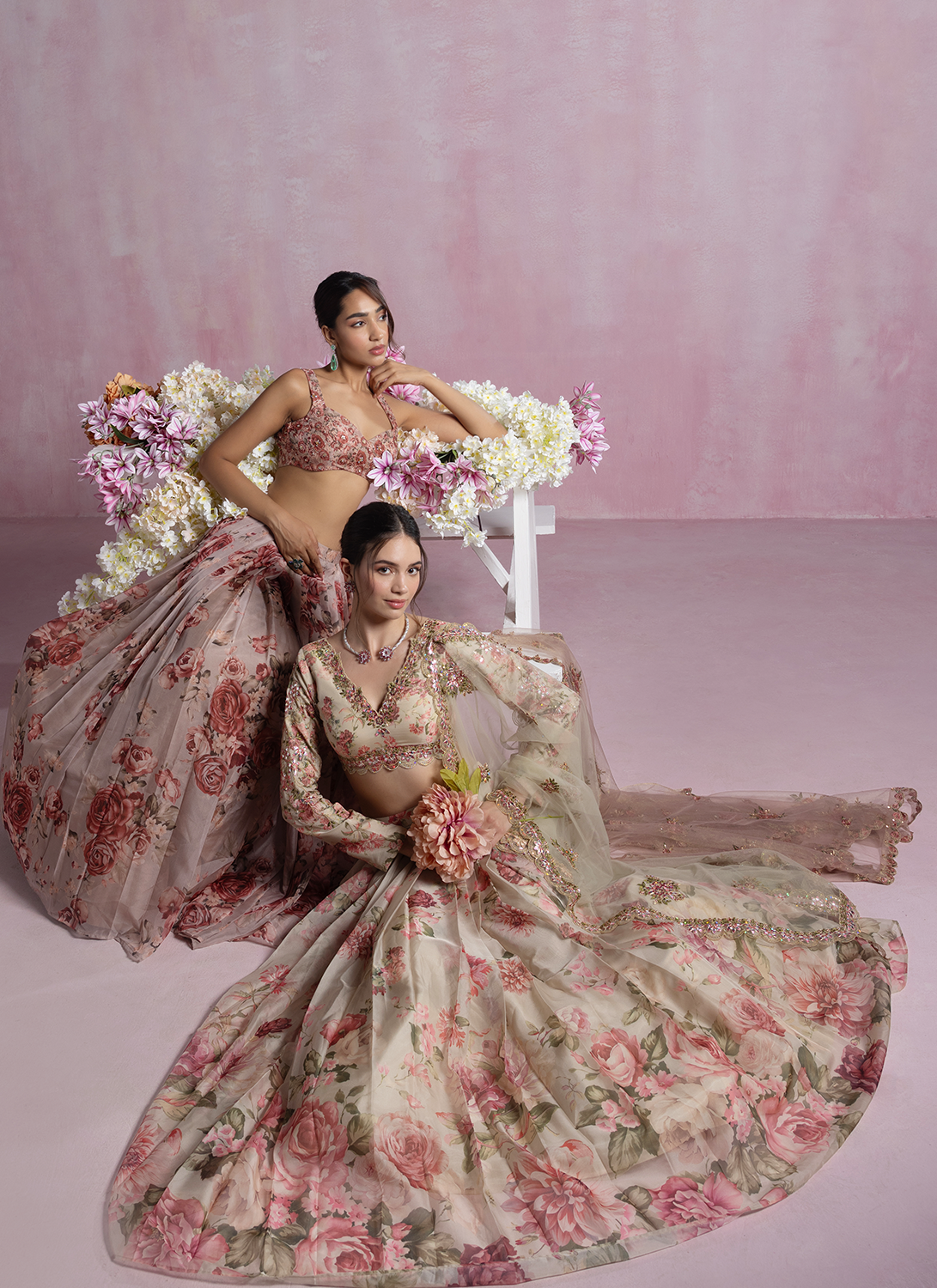
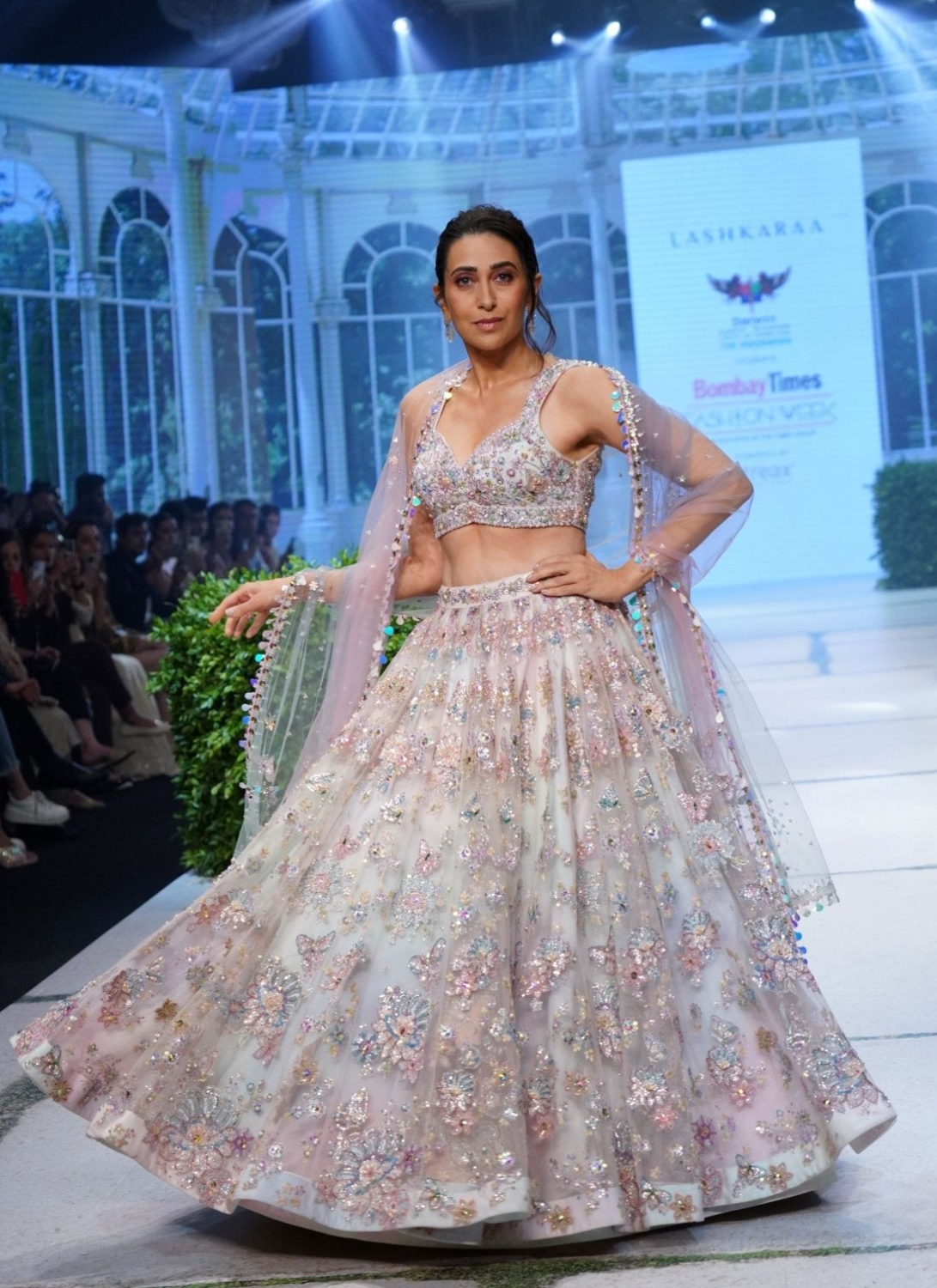
Mirror work has never really left the spotlight, but it has found new ways to shine. For a brand like Lashkaraa, which is built on the belief that Indian artisanal heritage and contemporary style belong together, shisha embroidery is a natural fit. Drawing inspiration from India's artisanal heritage, Lashkaraa offers a perfect fusion of classic and contemporary styles. For example, the Lavender Multicolor Embroidered Satin Lehenga or Dusty Lilac Embroidered Silk Saree are made for the diverse tastes of modern women, and mirror work sits right at that intersection.

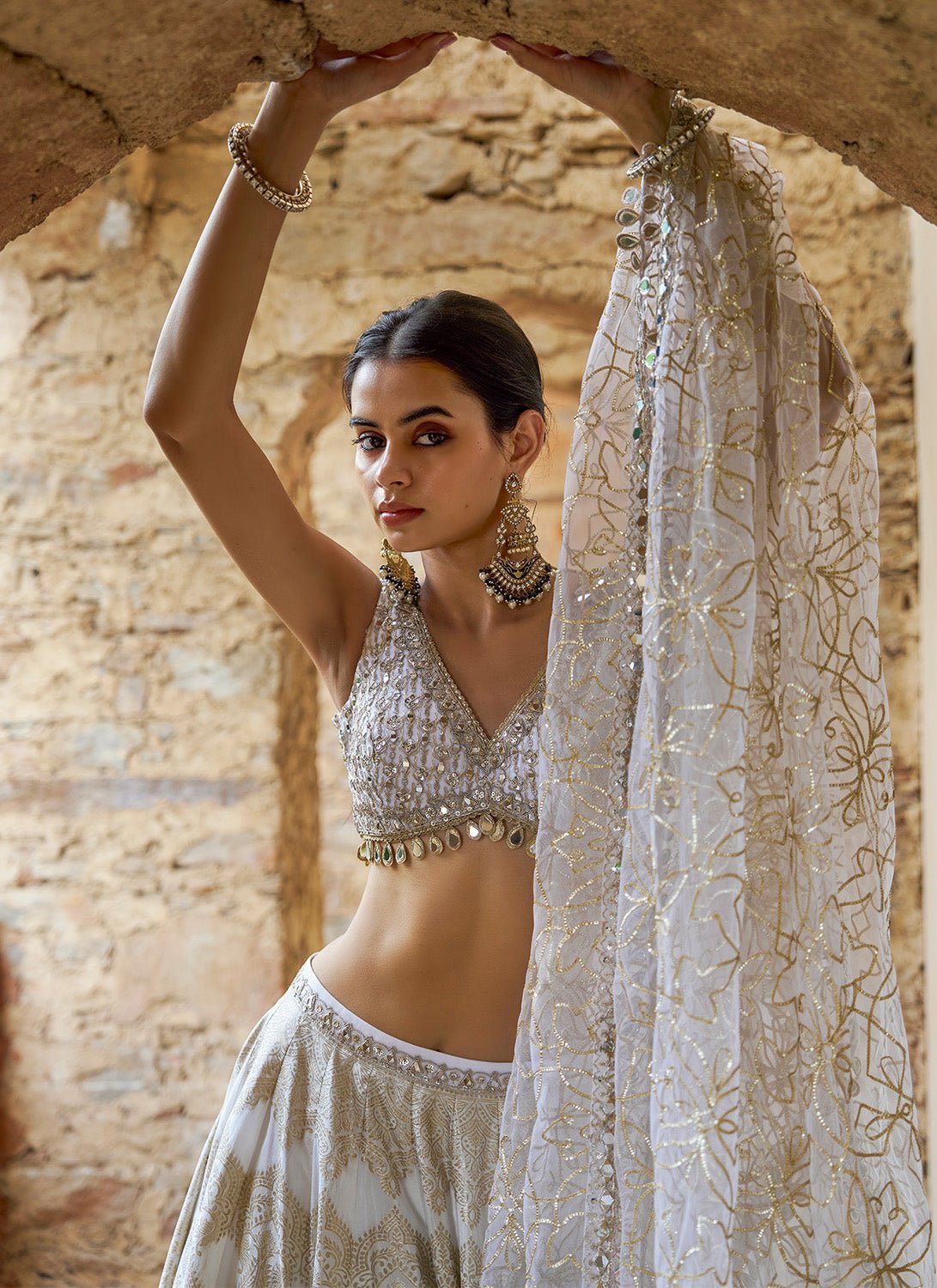
In practice, this means shisha appearing not just on traditional silhouettes but across lehengas, anarkalis, sharara suits, dupattas, and blouses designed for today's festive wardrobe. Take our bestselling White and Gold Embroidered Viscose Brocade Lehenga, for example, which blends a traditional silhouette with beautiful brocade skirts and is finished with mirror work that doesn’t feel over the top. While the Black Embroidered Velvet Satin Lehenga celebrated mirror work and embroidery in all its glory to give you a black lehenga straight out of a cosmic dream.

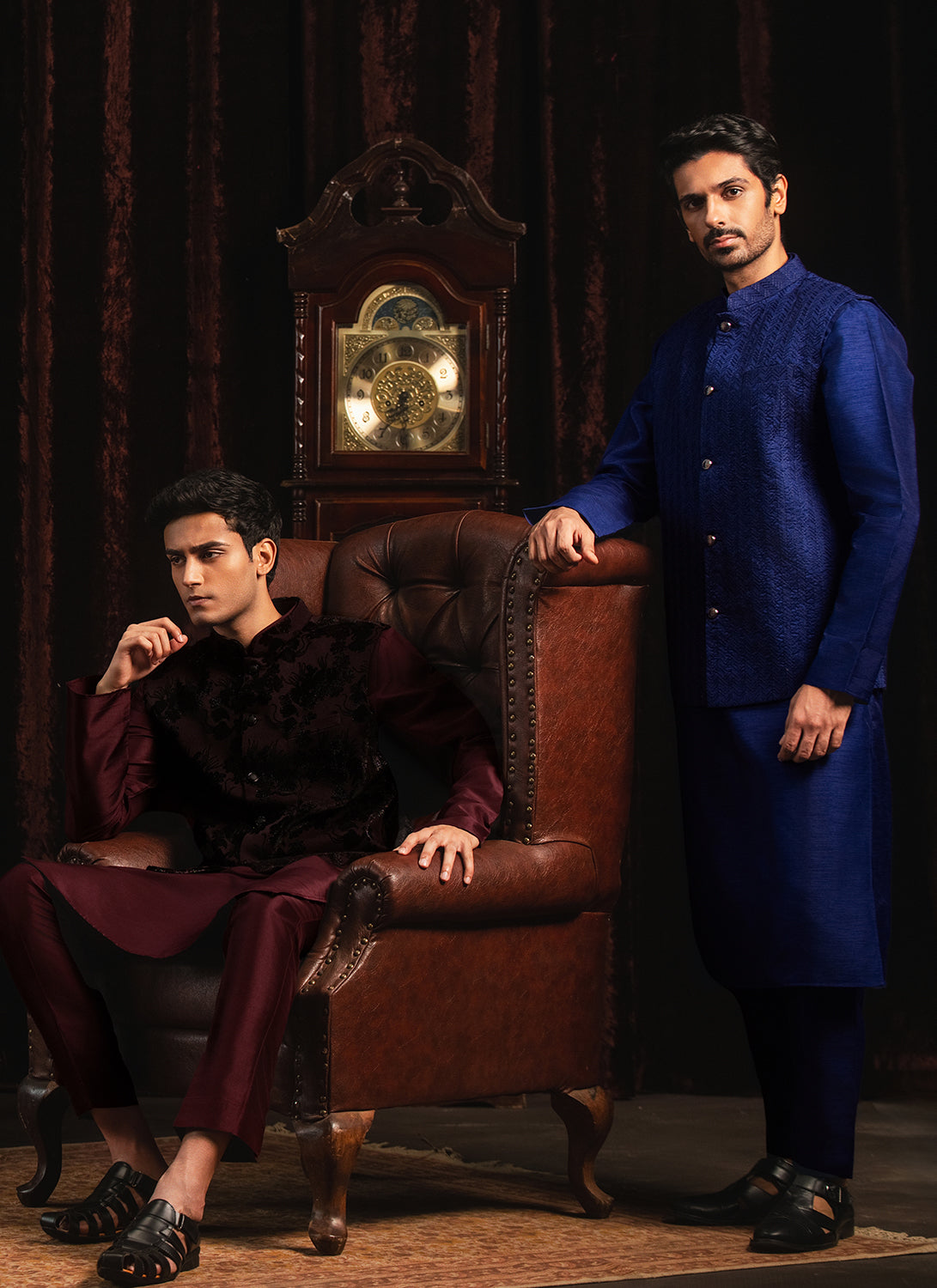
It’s not just in women’s clothing that mirror work finds its claim. Men’s clothing, such as kurtas and sherwanis, is often embellished with shisha embroidery to enhance the festive appeal. Lashkaraa’s Peach Embroidered Silk Kurta Set is a perfect example of a subtle silhouette being enchanted with shisha mirror work elegantly spread across the canvas. If you’re looking for a coordinated look, the Peach Embroidered Silk Straight Suit for women pairs perfectly with the men’s kurta for a matching moment.
Traditional couture clothing often consists of elaborately designed garments featuring handcrafted mirror work on only the highest-quality fabrics, and that same standard carries through to how the craft is treated in contemporary collections.
How to Care for Mirror Work Embroidered Garments
Due to the sensitive nature of attaching tiny mirrors to a canvas, shisha-embroidered outfits require special care when handling and washing.
Washing: Always hand-wash or dry-clean. Machine washing can loosen thread cages, snag embroidery, and crack mirrors. Use cool water and a mild detergent, pressing gently rather than wringing.
Drying: Press out excess water between two towels, then lay flat to air-dry. Never hang wet, as the weight can distort the fabric and stitching.
Ironing: Never iron directly over mirrors. Press on the reverse side or use a pressing cloth on a low heat setting.
Storage: Fold loosely in cotton muslin or acid-free tissue. Avoid plastic bags and sharp creases across embroidered sections.
Repairs: If a mirror falls out, a skilled embroiderer can usually replace it while the thread cage is still intact. For precious or antique pieces, professional textile conservation is worth considering.
Explore Lashkaraa's Mirror Work Collections
Shisha embroidery is a living craft, and every lehenga, anarkali, or dupatta that carries it forward keeps that tradition alive. At Lashkaraa, mirror work is treated with the care it deserves and brought into contemporary silhouettes without losing the artisanal soul that makes it extraordinary.
If you are dressing for a wedding, a festive occasion, or simply want a piece that tells a story, explore Lashkaraa's collection and find your own moment to shine.